Propane vs Natural Gas Grill: Which Fits Your Home? (November 2026)
Choose propane for a grill you can place without a gas line, or natural gas for a fixed setup with an outdoor connection. Your home, fuel access and willingness to manage a tank decide which Weber Spirit E-325 fits.
On this page (7 sections)
- Propane vs natural gas grill: what is the main difference?
- Which grill fits your outdoor space?
- How often will you need to manage fuel?
- Do the two Weber Spirit E-325 grills cook differently?
- How do setup and safety affect the choice?
- Which Weber Spirit E-325 should you buy?
- Which fuel fits your home best?
Choose propane for a grill you can place without a gas line, or natural gas for a fixed setup with an outdoor connection. In the propane vs natural gas grill decision, fuel access and where you plan to cook matter more than the grill's burner layout.
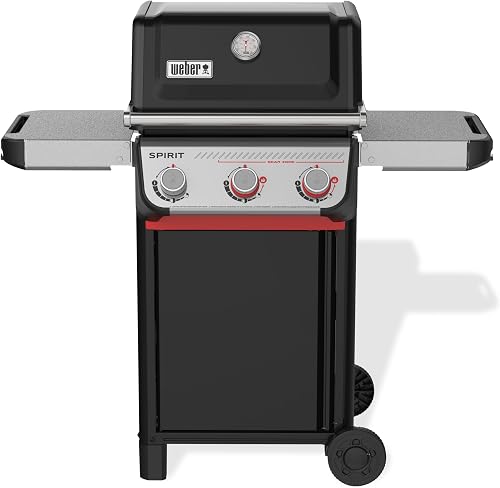
The Weber Spirit E-325 comes in both fuel versions. Each has 3 burners, a 360-square-inch cooking area, Snap-Jet Ignition and porcelain-enameled cast-iron grates.

Propane vs natural gas grill: what is the main difference?
Propane comes from a tank; natural gas comes through a compatible gas line. That changes how you plan the grill's location and keep it ready to cook.
A propane grill can work where you can safely place and use its tank according to the manual and local rules. You still need to track the fuel level and arrange a refill or replacement when the tank runs low.
A natural gas grill depends on a suitable connection at the cooking spot. Once the setup is in place, you don't have to manage propane tanks, but the grill's location is tied to that line.
The two Spirit E-325 versions share several cooking features. Weber says the Boost Burners unleash 40% more power in the Sear Zone, and both models have burners that ignite individually.
Which grill fits your outdoor space?
Choose the propane model when you need more freedom to position the grill; choose natural gas when your cooking area already has a compatible line. Measure the space and check the fuel connection before choosing.
The propane Spirit E-325 is the more flexible choice if you might move the grill within an approved outdoor area. Its tank still needs a suitable, secure place, and the manual's clearance and setup instructions apply.
The natural gas Spirit E-325 makes sense when the grill will stay near a compatible connection. A long or inconvenient route to the line can make the setup less practical, so plan around the actual location instead of assuming the grill can go anywhere.
If you rent, live in a condo or plan to grill on a balcony, check building rules and local fire requirements first. Our guide to using a gas grill on a balcony covers the questions to settle before choosing a fuel.
Is a propane or natural gas grill easier to move?
Propane is usually the more practical option if you expect to change the grill's position, while natural gas suits a stationary spot. The connection determines how much freedom you have.
The propane version still needs safe handling of its tank and gas hose. Moving any grill means following the maker's directions and keeping it away from structures and combustible materials.
A natural gas model should stay where its approved connection can reach. Have a qualified professional assess any change to the gas line or connection.
How often will you need to manage fuel?
Propane requires attention to tank fuel; natural gas avoids tank changes when the connection is available. Think about how often you cook and whether a refill trip would interrupt your routine.
A tank can be convenient if you grill occasionally or want to use the grill in a spot without a gas line. Keep a spare only if you can store it safely under local rules and the manufacturer's guidance.
Natural gas can simplify regular cooking at a fixed location. The connection doesn't mean fuel costs are automatically lower, since rates, usage and installation costs vary by home.
Estimate your routine before deciding. If you're unsure how tank use affects your schedule, read how long a propane tank lasts on a grill.
Do the two Weber Spirit E-325 grills cook differently?
Both versions have 3 burners and a 360-square-inch cooking surface, so choose mainly by fuel access and placement.
Both versions have Snap-Jet Ignition, which lights each burner individually by pressing and turning its knob. Weber says both have porcelain-enameled cast-iron grates and stainless steel Flavorizer Bars.
Both models have 19,000 BTU of heating power. That figure alone doesn't predict how quickly a particular meal will cook in your weather or setup.
The Weber Spirit E-325 is a propane grill, and the Weber Spirit E-325 Natural Gas is for natural gas. Choose the version that matches your fuel source.
How do setup and safety affect the choice?
Follow the owner's manual for the exact fuel version, clearances and connection requirements. A grill that fits the patio still needs a safe location and correct installation.
Place the grill outdoors in a well-ventilated area. Keep it away from siding, railings, eaves and other materials according to the clearances in its manual.
For a natural gas connection, use a qualified professional to check that the supply and connection suit the grill. Don't improvise an adapter or extend a line yourself.
For propane, secure and handle the tank as the manual directs. Check the hose and connections as instructed, and close the tank valve when the grill is not in use.
Our guide to safe distance between a gas grill and a house explains how to think through placement. Follow the grill manual and local fire rules if they set stricter requirements.
Which Weber Spirit E-325 should you buy?
Pick the propane Weber Spirit E-325 if you need a tank-fed grill you can position within a suitable outdoor area; pick the Weber Spirit E-325 Natural Gas if your fixed cooking spot has a compatible line. The two models share the core cooking layout, so let your home's fuel setup decide.
If you want a broader look at tank-fed options, compare the models in our propane grill guide. If fuel type isn't the only choice, our gas grill vs pellet grill comparison explains how the cooking approach differs.
Are both models good for searing?
Both have Weber's Boost Burners and a Sear Zone, features intended for high-heat searing. Weber says the Boost Burners unleash 40% more power in that zone.
Your searing results also depend on preheating, food thickness and how you manage the burners. The feature description isn't a promise that every meal will sear the same way.
Does natural gas mean lower running costs?
Not by itself. The cost depends on local gas rates, how often you grill, how much fuel you use and any cost to install or extend a gas connection.
Compare your own utility rate and propane refill cost if running expense matters. Include connection work in the calculation for natural gas, and consider convenience as well as the per-use cost.
Which fuel fits your home best?
Choose based on the connection you have and how fixed you want the grill to be. Propane suits flexible placement and homes without a gas line; natural gas suits a permanent spot with a compatible connection.
For a patio with no outdoor gas connection, choose the propane Spirit E-325 and plan for tank storage and refills. For a dedicated grilling area already served by a compatible line, choose the natural gas Spirit E-325.
If you want to keep comparing tank-fed grills, start with our guide to choosing a propane grill. When your home has a suitable gas line and a fixed cooking area, choose the natural gas version and have the connection checked before setup.
Frequently asked questions
Is propane or natural gas better for a grill?
Propane is better when you need flexible placement or don't have an outdoor gas line. Natural gas is a better fit for a fixed grilling area with a compatible connection, since it avoids routine tank changes.
Neither fuel is automatically better for every home.
Can you convert a propane grill to natural gas?
Don't assume a propane grill can be converted. Fuel systems and connection requirements differ, so buy the version that matches your fuel source and follow the grill maker's instructions.
Ask the maker or a qualified gas professional about a specific model before changing its fuel setup.
Does a natural gas grill need a gas line?
Yes. A natural gas grill needs a compatible natural gas connection at its outdoor location.
Plan the grill position around that connection and have the setup checked by a qualified professional.
If you don't have a suitable line, a propane model may be the simpler option.
Does propane or natural gas make food taste different?
Fuel choice alone isn't a reliable reason to expect a different flavor from these Weber Spirit E-325 versions. Both have porcelain-enameled cast-iron grates and stainless steel Flavorizer Bars.
Cooking method, food and heat control affect the result too.
Which Weber Spirit E-325 should I choose?
Choose the propane Weber Spirit E-325 if you want tank fuel and more placement flexibility. Choose the natural gas version if your grilling spot has a compatible outdoor line and you want to avoid tank changes.
Both have 3 burners and a 360-square-inch cooking area.