How Long Does a Propane Tank Last on a Grill?
A full 20 lb tank often lasts about 18–20 hours on a typical grill. If you’re asking how long a propane tank lasts on a grill you’re considering, burner output and cooking habits will shape the estimate.
On this page (8 sections)
- How long does a propane tank last on a grill?
- What changes how long propane lasts?
- How do you estimate fuel use before buying a grill?
- How should you set up a grill to manage propane use?
- What common mistakes make a tank run out sooner?
- How can you check how much propane is left?
- When should you refill or keep a spare tank?
- How long does a propane tank last on a grill in real use?
A full 20 lb propane tank often lasts about 18–20 hours on a typical grill, but how long a propane tank lasts on a grill depends on burner output, heat settings, and cooking time. That estimate can help you decide whether your current tank will cover dinner or a weekend of grilling.
Treat the hours as a planning range, not a guarantee. Check how much fuel remains before a long cook, and consider a refill or spare if running out mid-meal would be a problem.
How long does a propane tank last on a grill?
A full 20 lb tank often lasts about 18–20 hours on an average propane grill. Using several burners on high or allowing a long preheat can shorten that time.
Your grill’s fuel use depends more on its burner output and your routine than on the number of meals you expect to cook. A quick cook with one burner may use less propane than a long session with several burners running.
For a closer estimate, check the grill manual for fuel consumption information. If it gives an hourly rate, multiply that by the hours you expect to grill, then compare the result with the propane remaining.
What changes how long propane lasts?
Burner use, heat setting, preheating, and weather affect how quickly a tank empties. Several burners on high use fuel faster than one burner at moderate heat.
Long preheats and repeated lid opening can extend a cook. Wind and cold may also mean you need to run the grill longer to maintain heat.
The right grill size depends on how many cooking zones you actually use. Our guide to choosing a propane grill can help you match burner count and cooking space to your usual meals.
How do you estimate fuel use before buying a grill?
Start with burner output, then think about how you’ll use the cooking area. A grill’s BTU rating describes heat output, but it doesn’t predict exactly how many cooking hours you’ll get from a tank.
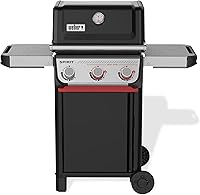
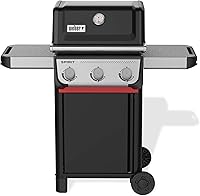
The Weber Spirit E-325 has 3 burners and a 19,000 BTU rating. It suits someone who wants a compact grill with a dedicated sear zone and can often cook with fewer than all 3 burners; skip it if you regularly need room for larger gatherings.
The Monument Grills 4-Burner offers 4 main burners and a 525 sq in total cooking area. It fits cooks who want room to prepare food for a group and can use only part of the grill for smaller meals; skip it if that extra cooking space would mostly sit unused.
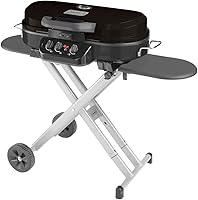
The Megamaster 3-Burner has 3 burners, foldable shelves, and a 434 sq in cooking area. Its 3 burners give you options for separate heat zones, while folding shelves help when space is tight; skip it if you need a larger cooking surface or a side burner.
The Char-Broil Performance 4-Burner adds a side burner to its 4 main burners. It suits cooks who want to prepare a side dish or sauce outside while grilling; if you plan to run both the main grill and side burner, include that use in your fuel planning.
These grills offer different amounts of cooking space and burner flexibility, but none can promise a specific number of hours per tank. Compare propane models in our guide to the best propane grills.
How should you set up a grill to manage propane use?
Connect and use the grill according to its manual, then choose only the heat zones your food needs. Place the grill on a stable outdoor surface with the clearances required by its manufacturer and local rules.
Before cooking, make sure the cylinder is upright and the hose and connections are in good condition. Follow the manual’s lighting steps, and turn on only the burners needed for the meal.
Preheat for the time the grill maker recommends. Once the grill is hot, turn burners down as needed and keep the lid closed when practical; that helps avoid extending the cook simply to recover lost heat.
For safer placement, check how far a gas grill should be from the house before choosing a spot.
What common mistakes make a tank run out sooner?
Leaving more burners on than the meal requires is an easy way to use propane unnecessarily. Match the number of active burners to the food and the cooking method, and reduce heat after preheating when the recipe allows.
Frequent lid opening can also add time to a cook. Plan the order of your food and gather tools before lighting the grill, so you aren’t leaving the lid open while searching for what you need.
Don’t rely on the tank’s age or the number of meals since its last refill to guess how much fuel remains. A short cook and a long cook use different amounts, so check by weight or with a suitable gauge.
How can you check how much propane is left?
Weighing the cylinder is a practical way to estimate the fuel remaining. Find the empty tank weight stamped on the collar, weigh the cylinder, then subtract the empty weight from the total.
The difference is the approximate weight of the propane inside. A gauge can provide a convenient estimate too, but follow its instructions and don’t treat a reading as exact.
Never use a flame to check fuel or search for a leak. If you smell gas or suspect a leak, turn off the cylinder valve if you can do so safely, move away from ignition sources, and follow the grill and tank safety instructions.
When should you refill or keep a spare tank?
Refill before a planned gathering when you can’t confirm the tank has enough fuel. A spare cylinder can make sense if you grill often or can’t easily refill during a meal.
Choose a spare based on your storage space, local rules, and the tank manufacturer’s guidance. Keep cylinders upright and away from heat, and never store one indoors.
For occasional cooks, weighing the tank before a longer session may be enough to plan a refill. If you host often, a spare can save a trip when the tank runs low during meal prep.
How long does a propane tank last on a grill in real use?
For everyday planning, expect roughly 18–20 hours from a full 20 lb tank, then adjust for the grill and your cooking routine. Check the cylinder before a long cook, and arrange a refill or spare if an interruption would matter.
Choose a grill around the number of burners and cooking zones you’ll use most often. Pick the Weber Spirit E-325 for flexible cooking in a smaller grill.
The Monument or Megamaster offer extra cooking room, while the Char-Broil suits meals that use an outdoor side burner. Start with how to choose a propane grill if you’re still comparing sizes and fuel options.
Frequently asked questions
How long does a 20 lb propane tank last on a grill?
A full 20 lb tank often provides about 18–20 hours on a typical grill. The actual time varies with burner output, how many burners are on, heat settings, and total cooking time.
Long preheats and frequent lid opening can add to fuel use.
How can I tell how much propane is left?
Weigh the tank and subtract its stamped tare weight to estimate the propane remaining. A tank gauge can offer a quick reading, but weighing is a practical check when the grill has no built-in fuel indicator.
Never use a flame to check for fuel or leaks.
Does a grill use more propane with all burners on?
Yes. Running more burners or setting them higher increases fuel use, so the tank lasts for fewer cooking hours.
Use only the burners needed for the food and turn them down after preheating, while following the grill manual's instructions.
Can I leave a propane tank connected to my grill?
Follow the grill and tank manuals, and close the cylinder valve when the grill isn't in use. Keep the cylinder upright outdoors in a ventilated area, away from heat sources.
Check local rules and manufacturer instructions for storage and connection details.