How Long to BBQ Burgers on a Gas Grill
Plan on about 8 to 10 minutes total over medium-high heat, flipping once. That gives a medium burger from a 1/4-pound patty; thinner or thicker patties and other doneness levels change the time.
On this page (11 sections)
- How long do burgers take on a gas grill at medium-high heat?
- What grill temperature should you use for burgers?
- How long do you cook burgers for rare, medium and well done?
- How long does a thick or thin burger take to cook?
- Should you cook burgers with the lid open or closed?
- How do you know when a gas-grilled burger is done?
- How long should burgers rest after grilling?
- How do you grill a big batch without drying the burgers out?
- How does cooking time change in cold or windy weather?
- When should you buy a gas grill for burger season?
- The bottom line on how long to BBQ burgers on a gas grill
Plan on about 8 to 10 minutes total over medium-high heat, flipping once. That gives a medium burger from a 1/4-pound patty; thinner or thicker patties and other doneness levels change the time.
Learning how long to BBQ burgers on a gas grill comes down to heat level and patty size more than any fixed clock. Gas grills heat fast and stay consistent, so the cook time is short and the margin between a juicy burger and a dry one is narrow.
Watch the patties and use a thermometer instead of guessing.
How long do burgers take on a gas grill at medium-high heat?
A standard 1/4-pound beef patty needs about 8 to 10 minutes at medium-high heat, with one flip at the halfway mark. Each side gets 4 to 5 minutes, enough for a browned crust and a cooked center.
Medium-high on most gas grills means the dials around three-quarters of the way up. Preheat with the lid closed for 10 to 15 minutes so the grates are hot before the meat goes on.
Start timing when the burgers hit the grates, not when you light the burners. Moving the patties around too often slows browning, so set them down and leave them until the flip.
A single flip also keeps the surface in contact with the hot grate long enough to build that crust. If you are cooking several patties at once, leave a little space between them.
Crowded burgers steam instead of sear, and the middle of the batch cooks slower than the edges.
What grill temperature should you use for burgers?
Aim for 375°F to 450°F on the lid thermometer. That range browns the outside in 4 to 5 minutes a side while the inside reaches a safe temperature.
If your grill runs hot, close the lid and use the lower end of the range. For thicker patties, keep the heat at 375°F to 400°F so the center cooks before the crust burns.
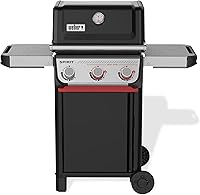
A gas grill with a lid thermometer makes this easy to hold. The Weber Spirit E-310 gets to temperature quickly and holds it across the grates, which suits burgers that need steady medium-high heat rather than a roaring flame.
Its porcelain-enameled, cast-iron grates retain heat evenly, so the patties brown at a similar rate instead of one side racing ahead of the other.
How long do you cook burgers for rare, medium and well done?
Rare takes about 6 to 7 minutes, medium about 8 to 10, and well done about 11 to 12 minutes at medium-high heat. Time is a rough guide, so use a thermometer for the final call.
| Doneness | Internal temperature | Rough time at medium-high |
|---|---|---|
| Rare | 125°F to 130°F | 6 to 7 minutes |
| Medium rare | 135°F | 7 to 8 minutes |
| Medium | 145°F | 8 to 10 minutes |
| Medium well | 155°F | 10 to 11 minutes |
| Well done | 160°F | 11 to 12 minutes |
Ground beef is safe at 160°F. Below that, the risk from bacteria in ground meat rises, so anyone in a higher-risk group should eat burgers cooked to well done.
Take the patties off a few degrees early and let them rest. The temperature climbs a little as the burger sits for 2 to 3 minutes.
The gap between medium and well done is only a couple of minutes on the grill, so stay close once the first side is flipped.
How do you hit medium without overshooting?
Set a timer for the low end of your target range and check with the thermometer at that point. If the reading is still under, give it another minute and check again rather than walking away.
Pull the patty when it reads about 5°F below your goal, then let the rest carry it the last few degrees. That small buffer is what keeps a medium burger from turning into a well-done one.
How long does a thick or thin burger take to cook?
Thicker patties need more time at a slightly lower heat; thin patties cook fast and dry out easily. Adjust the heat and the clock to the thickness, not just the weight.
A 1/2-pound patty about 3/4 inch thick can take 12 to 14 minutes at 375°F. Keep the lid down between flips so the heat surrounds the meat.
A smash-style patty, pressed to about 1/4 inch, needs only 2 to 3 minutes a side at high heat. Cook these in batches and serve them right away.
Thin patties have very little margin, so have the buns and toppings ready before they hit the grates.
For thick patties, a brief sear on high heat followed by a move to lower heat works well. You get the crust first, then the center catches up without the outside burning.
Should you cook burgers with the lid open or closed?
Cook with the lid closed for anything thicker than a smash burger. Closing the lid traps heat and cooks the center more evenly while the outside browns.
For very thin patties or a quick sear, you can leave the lid open and watch the surface closely.
With the lid open, expect to flip sooner and lose some of the even heating.
A high-dome lid like the one on the Weber Q 2800N+ gives larger foods room to cook under trapped heat. That wide temperature range from 250°F to 700°F lets you run medium-high for burgers or drop low to hold them warm while the rest finish.
The lid thermometer on this model also lets you read the temperature at a glance without lifting the lid and losing heat.
How do you know when a gas-grilled burger is done?
Check the center of the patty with an instant-read thermometer. Ground beef is safe at 160°F, and the reading matters more than how the outside looks.
Push the probe in from the side, into the middle of the patty, and wait for the reading to settle. A charred crust can hide an undercooked center, so judge by temperature.
Look for clear juices and a firm but not hard feel as secondary clues. Don't press the patties flat with a spatula; that squeezes out juice and dries the meat.
If you are cooking a batch, probe each patty rather than trusting the one that looks thickest.
How long should burgers rest after grilling?
Let burgers rest for 2 to 3 minutes off the heat before serving. The brief rest lets the juices settle so they stay in the meat rather than running onto the plate.
Move the patties to a warm spot or the warming rack on your grill while the rest finish. Toasting the buns on the grates during the rest is an easy use of that time.
Don't stack the patties or cover them tightly for long; they steam and lose the crust you just built. Serve them warm, with cheese added in the last minute of cooking so it melts without burning.
A warming rack holds them above the main grates, out of the direct heat, which keeps them warm without cooking them further.
How do you grill a big batch without drying the burgers out?
Work in batches and use a two-zone setup so cooked burgers wait at lower heat. Keep one burner on medium-high for searing and another on low for holding.
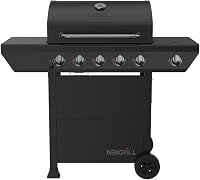
A larger grill makes batching easier. The Char-Broil Performance 4-Burner offers 435 sq in of primary cooking space and four burners, so you can sear on the hot side and move finished burgers to the cooler zone or the 130 sq in warming rack.
It also has a side burner, which keeps sauces and sides off the main grates while the burgers cook.
How does cooking time change in cold or windy weather?
Cold and windy weather slows the cook, so preheat longer and keep the lid closed. Add 2 to 3 minutes to the total time and rely on the thermometer.
Place the grill out of the wind and check the lid thermometer more often. On a balcony or small patio, follow the safety rules in our guide to whether you can use a gas grill on a balcony.
A full propane tank also helps the grill hold heat through a long cook. Check your supply ahead of time with our guide to how long a propane tank lasts on a grill.
A tank that is nearly empty can drop pressure mid-cook, which is the last thing you want when the patties are halfway done.
When should you buy a gas grill for burger season?
The best deals often land at the end of summer and during holiday sales. If you plan to cook burgers often, the timing can save you money without changing the method above.
Our guide to the best time to buy a gas grill covers the seasonal windows worth watching. Buy when the grill you want is discounted, then practice the heat settings before your first big cookout.
If you want more searing power for burgers, an infrared burner gas grill heats faster and reaches high temperatures quickly. It's worth a look if crust matters more to you than a low-and-slow setup.
Practice a batch of plain patties first so you learn how your grill behaves before cooking for a crowd.
The bottom line on how long to BBQ burgers on a gas grill
Cook 1/4-pound patties for about 8 to 10 minutes over medium-high heat, flip once, and finish at 160°F. Thicker burgers need a bit longer at slightly lower heat, and thin smash patties cook in minutes.
Set your grill to medium-high, preheat with the lid closed, and keep a thermometer close. When you know how long to BBQ burgers on a gas grill at your own settings, the rest is just watching the crust and the center.
If you're shopping for a grill that holds steady heat for burgers, start with the best time to buy a gas grill and compare models from there.
Frequently asked questions
What temperature should a gas grill be for burgers?
Aim for medium-high heat, roughly 375°F to 450°F on the lid thermometer. That range gives a browned crust without burning the surface before the center cooks through.
How long does it take to cook a frozen burger on a gas grill?
Allow roughly 15 to 20 minutes over medium heat for a frozen patty. Start lower so the outside doesn't char while the inside is still cold, then finish with a couple of minutes at medium-high.
How do you know when a gas-grilled burger is done?
Use an instant-read thermometer in the center of the patty. Ground beef is safe at 160°F, which reads as medium well to well done; medium is about 145°F but carries more risk for ground meat.