How to Season a New Gas Grill
To season a new gas grill, heat it to about 400°F with the lid closed, coat the grates thinly with a high-smoke-point oil, and let that oil burn in until the smoke fades. Repeat two or three times, then cook on it.
On this page (9 sections)
- Why does a new gas grill need seasoning?
- What should you do before the first seasoning?
- How do you season a gas grill step by step?
- What oil should you use, and how much?
- How do you know the seasoning worked?
- What changes with different grate materials?
- How do you keep the seasoning after the first cook?
- Which grills are easy to season?
- How does seasoning fit into buying and storing a grill?
To season a new gas grill, heat it to about 400°F with the lid closed, coat the grates thinly with a high-smoke-point oil, and let that oil burn in until the smoke fades. Repeat two or three times before you cook anything on it.
Seasoning a new gas grill is a short, cheap job that changes how your first burgers taste. The grates get a slick, dark layer that releases food and blocks moisture, so the surface stays usable for years.
Why does a new gas grill need seasoning?
Seasoning gives the cooking grates an oil layer that bonds to the metal as it heats. That layer stops food from sticking and shields cast iron from moisture between cooks.
Many grates ship with a light factory coating to protect them in the box. A burn-off and an oil coat replace that coating with something you want near food.
Your first cook should taste like steak, not like the warehouse.
Skip seasoning and you'll get two problems: food that tears when you lift it, and grates that spot with rust within weeks. The fix takes under an hour and needs one bottle of oil.
What should you do before the first seasoning?
Read the assembly manual, remove packaging and grease, and place the grill outdoors. Season only outside with good airflow, because the burn-off and oil smoke both produce fumes you don't want indoors.
Wipe the grates with a paper towel to remove packing dust. Check that the burners, ignition and grease tray are set up as the manual shows.
This is also the moment to look over the basics of running a gas grill so the controls feel familiar.
The Weber Spirit E-210 and the Char-Broil Performance 4-Burner both run on a propane tank that's sold separately, so have one filled before you start.
That matters more than it sounds: a full tank is what lets you hold a steady medium-high heat through two or three seasoning coats without the burners fading partway through.
The grease system is worth a quick check too. The Weber Spirit E-210 has a pull-out grease tray and a large drip pan, so slide the tray out and make sure it sits level before you start.
A tray that binds will be harder to empty once it's full of drippings from the burn-off.
How do you season a gas grill step by step?
Burn off the factory coating, oil the hot grates thin, and let each coat smoke out. Work through the six steps below in order.
- Open the lid and turn all burners to high for 10 to 15 minutes. Close the lid and let the grill reach about 400°F to 450°F.
- Let it cool slightly, then brush the grates with a stiff wire brush to lift loose dust and residue.
- Oil the warm grates with a thin coat of high-smoke-point oil. Use a folded paper towel held with tongs or a silicone brush.
- Close the lid and keep the burners at medium to medium-high for 15 to 20 minutes. Watch for smoke, which means the oil is cooking in.
- Repeat the oil and burn-in for two or three coats. The grates should look dark and slightly glossy when you finish.
- Turn the burners off and leave the lid closed while the grill cools. Add a very light oil coat once the grates are warm, not hot.
The whole session runs about 40 to 60 minutes. If your grill has porcelain-enameled, cast-iron grates, as the Weber Spirit E-210 does, keep the coats thin so the coating doesn't build up sticky.
What oil should you use, and how much?
Use a high-smoke-point oil such as canola, grapeseed or avocado, and apply just enough to make the grates shine. Too much oil pools, burns dark and leaves a gummy layer that grabs food.
Pour a small amount onto a paper towel or a small dish, not straight onto the grates. A thin film is the goal; you should barely see the oil once you've spread it.
Wipe off any drips before closing the lid.
Skip butter and low-smoke oils for the seasoning step. They burn before the grates bond and leave a sticky mess.
Save flavored oils for finishing food after it comes off the heat.
On a larger surface, the oiling pass takes longer than the burn-in. The Char-Broil Performance 4-Burner spreads 435 sq in of primary cooking space across four burners plus a 130 sq in warming rack, so work in sections and keep the coat even rather than dumping oil in one spot.
The warming rack usually needs only a light wipe, since smaller food sits there briefly and never sears hard against the grates.
How do you know the seasoning worked?
The grates should look dark and slightly glossy, and water should bead on the surface instead of soaking in. A properly seasoned grate releases food with little resistance.
Check the color between coats. A new stainless or cast-iron grate starts bright and turns deep brown or black as the oil carbonizes.
Porcelain-enameled grates hold their factory finish, but the oil layer still makes them slicker.
If the grates look patchy after three coats, add one more thin coat. Don't keep adding oil to fix a patch; spread it thin and let the heat do the work.
How long should you wait before the first cook?
Let the grill cool completely after the last coat, then cook when you're ready. There's no fixed rest period, and a grill that has cooled to the touch with a dark, glossy surface is set.
If you season in the evening, cooking the next day gives the layer a little more time to settle.
What changes with different grate materials?
Cast iron and stainless steel need the full oil treatment, while porcelain-enameled grates need a lighter coat. Match the number of coats to what your grates are made of.
Cast-iron grates
Cast iron holds heat well and takes seasoning readily. Two or three thin oil coats build a good base.
The Weber Spirit E-210 uses porcelain-enameled cast iron, which combines heat retention with an easy-clean finish.
Stainless steel grates
Stainless grates resist rust but still benefit from an oil layer so food doesn't stick. Two coats are enough.
Brush and re-oil after each cook to keep the surface slick.
Porcelain-enameled grates
Porcelain enamel is a glass-like coating, so it doesn't absorb oil the way bare iron does. A single light coat before the first cook keeps food from sticking.
Avoid metal brushes that chip the enamel; use a nylon brush on a warm grate instead.
How do you keep the seasoning after the first cook?
Re-oil the grates lightly after each session once they cool, and brush off food residue before it hardens. That habit keeps the layer dark and stops rust between cooks.
Don't scrub the grates down to bare metal. A quick brush while they're still warm lifts residue without stripping the oil.
Rinse and dry the brush afterward.
Close the lid and cover the grill when it's not in use. A cover keeps rain and dust off the grates.
If you store the grill on a balcony, check our guide to whether a gas grill belongs on a balcony before you park it there long term.
Which grills are easy to season?
A grill with a wide, flat cooking surface and a reliable ignition is the easiest to season well. Even heat across the grates means every part of the surface bonds at the same rate.
The Weber Spirit E-210's two burners light individually with Snap-Jet Ignition, so you can season one side at a time if you want. Its 360 sq in surface covers a family cookout without spreading oil over a huge area.
The hammertone metal side tables give you a scratch-resistant spot to set the oil bottle and a paper towel while you work. For larger households, a gas grill 4 burner like the Char-Broil Performance 4-Burner offers 435 sq in of primary cooking space and 130 sq in of warming rack, which means a longer oiling pass but room to feed a crowd.
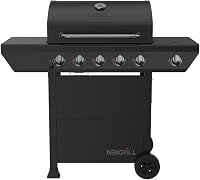
For camping or small patios, the Nexgrill Tabletop 1-Burner is a single 10,000 BTU burner on a cast-aluminum frame. Its 203 sq in grate seasons in a few minutes and its locking lid keeps the surface covered in storage.
How does seasoning fit into buying and storing a grill?
Season right after assembly, and you'll never cook on a raw grate again. The job takes under an hour and pays back every time you lift a burger without tearing it.
If you haven't bought yet, our guide to the best time to buy a gas grill covers when sales and stock make the decision easier. Plan your first seasoning session for a dry day with the grill outdoors and the lid clear.
Once the layer is set, keep the grill covered and re-oil after each cook. That simple routine keeps the surface dark and slick, so how to season a new gas grill becomes a one-time job you rarely repeat.
Store the grill with the lid closed and the grease tray emptied. A clean tray and a light oil coat do more for the grates than any special product.
Frequently asked questions
Do I have to season a new gas grill before the first cook?
Yes. Bare cast-iron and stainless grates come with a factory coating, so a short burn-off and an oil layer keep your first meal from tasting like the factory.
Porcelain-enameled grates also benefit from a light oil coat so food releases cleanly.
How long does it take to season a gas grill?
Plan about 40 to 60 minutes for the first session. Heat-up, oiling and burn-in run 15 to 20 minutes per coat, and two or three coats get most grills ready.
A second short session the next day helps the layer set.
What oil should I use to season grill grates?
Use a high-smoke-point oil such as canola, grapeseed or avocado oil. Olive oil works but smokes at a lower temperature, and butter burns.
Apply a very thin coat with a paper towel or a silicone brush and wipe off any excess.
Can I season a gas grill with the lid closed?
Yes, close the lid to hold heat and let the oil burn in evenly. Keep the heat at medium to medium-high, around 400°F, and watch for smoke that signals the oil is cooking in rather than pooling.
Open the lid when you check the grates.
Should I oil the grates before or after preheating?
Oil after the grill is fully hot. A thin coat on hot grates spreads evenly and bonds as it heats.
Oiling cold grates leaves a thick, sticky layer that smokes and gums up.
Add a little oil again after each cook once the grill cools.
Does seasoning stop grates from rusting?
The oil layer helps keep moisture off cast-iron grates, so it slows rust between cooks. Wipe on a light coat after the grill cools and keep the lid closed when the grill is not in use.
Porcelain-enameled grates still need a light coat to release food.