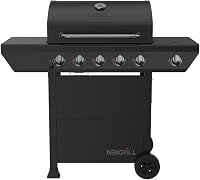
Do Gas Grills Use Liquid Propane Gas?
Yes, most gas grills run on liquid propane gas kept in a refillable tank under the cart. The tank holds liquid propane, which turns into gas vapor as it leaves the tank to feed the burners.
On this page (8 sections)
- Does gas grills use liquid propane gas?
- Why is propane sold as a liquid if the grill burns gas?
- Which gas grills use propane and which use natural gas?
- What size propane tank does a gas grill need?
- How does the propane tank connect to the grill?
- Why does my propane grill lose power in cold weather?
- How do you stay safe with a liquid propane tank?
- Which propane grill should you pick?
Yes, most gas grills use liquid propane gas kept in a refillable tank. That tank holds propane as a liquid under pressure, and the fuel turns into gas vapor as it leaves the tank and travels to the burners.
If you're shopping for a grill or just bought one, the fuel type matters before you light anything. This guide explains how propane works in a grill, why the tank says liquid, and how to set up safely.
Does gas grills use liquid propane gas?
Yes, the typical backyard gas grill runs on liquid propane gas, usually shortened to propane or LP. The tank under the cart stores the fuel as a liquid, and the grill burns it as a vapor.
The term "liquid propane" describes how the fuel is stored, not how it burns. Inside a sealed tank, propane sits as a liquid under pressure.
Open the valve and a small amount boils into gas vapor, which flows through the hose and regulator to the burners.
This matters for buyers because the fuel type is fixed by the grill's design. A propane grill needs a propane tank and hose.
A natural gas grill needs a gas line from your house. They are not interchangeable without a conversion kit, and some grills can't be converted at all.
A 3-burner cart grill like the Weber Spirit E-310 is built around a standard propane tank that hides in the cabinet. Small portable grills often take 1 lb cylinders instead of a 20 lb tank.
If you want to grill on an apartment balcony, read about whether you can use a gas grill on a balcony before you buy a tank.
Why is propane sold as a liquid if the grill burns gas?
Propane is stored as a liquid because it takes far less space that way. A tank packed with liquid propane holds much more fuel than the same tank filled with gas.
Propane turns from liquid to vapor at normal outdoor temperatures. That vapor is what reaches the burner and mixes with air to make the flame you cook over.
As vapor leaves the tank, more liquid boils to replace it, so the tank keeps feeding the grill until the liquid runs low.
Cold weather slows that boiling. In near-freezing conditions a tank can struggle to supply a strong flame, which is why winter grillers sometimes keep a spare tank warm.
This is a storage and temperature issue, not a sign that the grill is broken.
The regulator on the hose controls how much vapor reaches the burners. That's why a grill with a full tank still lights unevenly if the regulator or hose is faulty.
Which gas grills use propane and which use natural gas?
Most cart and portable grills sold for home use are propane models, and that's what you'll find in the Weber Spirit range. Natural gas grills exist too, but they need a permanent connection to your home's gas supply.
Propane suits renters, patios without a gas line, and anyone who wants to move the grill. The tank is refillable at hardware stores and gas stations, and a spare tank keeps the cookout going.
Natural gas suits a fixed outdoor kitchen with a plumbed line. It never runs out mid-cook, but the grill can't move, and installation costs more.
Check the label before you buy. A grill sold as a propane model is set up for a tank; a natural gas model arrives with different fittings.
Some grills accept a conversion kit, but the maker has to approve it. A 4-burner grill like the Weber Spirit E-435 with Sear Zone and side burner is a propane cart grill, so plan for a tank and a safe spot to store it.
What size propane tank does a gas grill need?
Full-size gas grills like the Spirit E-210, E-310 and E-435 take a standard 20 lb propane tank. These tanks fit in the cabinet or hang under the cart and connect with the grill's hose and regulator.
A 20 lb tank holds about 4.7 gallons of propane. How long it lasts depends on burner count and cooking time, so heavy searing sessions empty it faster than low-and-slow cooking.
Keep a spare tank so a cookout doesn't stop halfway.
Small portable grills often use 1 lb disposable cylinders. They're handy for tailgates and picnics but run out quickly, and the small cylinders cost more per pound of fuel.
Tank fittings matter too. US propane tanks use an overfill protection valve with a specific connection.
Don't mix tanks or adapters from another country or an older style without checking the grill's manual first. The E-435 and its siblings ship without a tank, so buy one before the first cook.
How does the propane tank connect to the grill?
The tank connects to the grill through a hose and regulator, and the regulator controls the pressure that reaches the burners. The hose ends in a fitting that screws onto the tank valve.
Follow the maker's steps for a leak check. Turn the tank valve on with the burner knobs off, then brush soapy water on the hose connections and the regulator.
Bubbles mean a leak, so close the valve and fix the fitting before lighting.
Don't overtighten the connection or use tools on the plastic coupling nut. Hand-tight is enough for most propane grills.
Store the tank upright, and never keep it indoors or in a hot car.
When the grill won't light, check the tank valve and the hose before assuming the grill is faulty. A closed valve, a loose fitting or a tripped regulator causes most no-light problems.
Why does my propane grill lose power in cold weather?
Cold weather slows the vaporization of propane, so a tank that's half full in summer can struggle to feed the burners in winter. The flame weakens and the grill heats slowly.
Keep the spare tank outdoors in a shielded spot out of deep shade and let it warm gradually to outdoor air temperature before swapping it in. Don't use a blowtorch or open flame to warm a tank.
The regulator can also trip when a tank is opened too fast. Close the valve, wait a minute, then open it slowly with the burners off.
If the flame stays weak with a full tank, the regulator or hose needs replacing.
Cold-weather grilling still works with a warm tank and a grill that's rated for it. Plan longer preheat times and keep the lid down.
How do you stay safe with a liquid propane tank?
Keep the tank upright and outdoors, and turn the valve off after every cook. Propane is flammable, and a leak in a closed space is dangerous.
Never store a propane tank in a garage, basement or shed. A cylinder in a hot car or near a heat source can vent or rupture.
Check the hose for cracks each season and replace it if it's worn.
Don't leave a grill burning unattended. Keep the lid open when lighting, close it once the flame is steady, and keep kids and pets away from the cart.
If you smell gas, close the tank valve and move away from the grill. Don't light a match or flick a switch.
Let the area air out before you investigate.
For first-time owners, how to use a gas grill for beginners walks through lighting and heat control.
Which propane grill should you pick?
For most people, a 3-burner propane cart grill like the Weber Spirit E-310 is the right size. It takes a standard 20 lb tank and gives you enough burner control for burgers, chicken and vegetables without a huge footprint.
The Weber Spirit E-210 suits small patios and couples, with 2 burners and 360 square inches of cooking space. If you cook for a crowd and want searing power plus a side burner, the Weber Spirit E-435 adds Boost Burners in the Sear Zone and a side burner for sides.
So does gas grills use liquid propane gas? Yes, and that's the fuel you'll buy in a refillable tank.
Choose a propane grill if you want a portable setup, keep a spare tank, and follow the leak-check and storage rules.
For more options, see our roundup of the best propane grills. If you're shopping, check when is the best time to buy a gas grill to plan your purchase around the season.
Frequently asked questions
Is propane the same as LPG?
Liquid propane gas (LPG) is the same fuel family sold as propane in the US. A US propane tank holds mostly propane, while other countries mix in butane.
The tanks and fittings differ, so don't mix them across regions.
Can I use liquid propane on a balcony?
That depends on your building and local rules. Many apartment and condo policies limit or ban open-flame grills on balconies, and some fire codes restrict propane cylinders above certain floors.
Check the rules before you set up.
How do I know when the propane tank is empty?
The grill's heat drops and the burner flame weakens as the tank runs out. A gauge on the tank or a spare full tank makes it easier to plan, since a tank can feel light when it is cold even with fuel left.