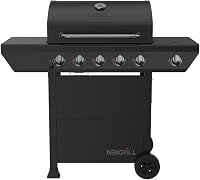
How to Fix the Igniter on a Gas Grill
To fix the igniter on a gas grill, start with the battery and the wire connections, then clean and regap the electrode. If the spark still won't light the burner, light it with a match and plan to replace the igniter.
On this page (9 sections)
- Why won't the igniter on your gas grill spark?
- How do you check the battery and wiring first?
- How do you clean and regap the electrode?
- What if the igniter clicks but the burner won't light?
- When should you light with a match instead?
- How do you replace a worn igniter or electrode?
- Why does the igniter work some days and not others?
- Which grills make ignition checks easier?
- The fix in short
To fix the igniter on a gas grill, check the battery and the wire connections first, then clean and regap the electrode. If the spark still won't light the burner, light it with a match and plan to replace the igniter.
Most no-spark problems come down to one of four things: a flat battery, a loose wire, a dirty electrode, or a gap that's too wide. Work through them in that order and you'll usually find the fault in a few minutes.
Why won't the igniter on your gas grill spark?
A dead battery or a broken connection is the usual cause. Push-button igniters need a small battery to send current to the electrode, and the wire between the button and the tip can work loose over a season of heat and vibration.
Turn the gas off before you start. Open the lid and press the button while you watch the electrode tip: a healthy igniter gives a crisp blue-white snap.
A weak, orange, or missing spark points to the battery or the wire.
If the button feels soft or doesn't click, the switch itself may be worn. Check that the grill is fully assembled and that no burner has been swapped or reinstalled backward after cleaning.
A burner tube that sits slightly out of line puts the electrode opening in the wrong place, and the spark jumps to nothing.
It also helps to know how your ignition is built. A single module can drive one electrode per burner, so a spark at one burner proves the battery and module are alive and narrows the fault to that burner's wire or tip.
The Coleman RoadTrip 285, for example, runs Instastart push-button ignition across its 3 burners, which is the simple layout this guide covers.
How do you check the battery and wiring first?
Replace the battery before anything else. Most push-button igniters use a single AA or AAA cell in a holder behind the control knob or under a small cap on the front panel.
Open the holder, take out the old cell, and look for corrosion or a damp contact. Wipe the contacts with a dry cloth and fit a fresh battery the right way round.
Then trace the wire from the button to the electrode under the burner. Push the connector firmly onto the tip and look for a cracked insulator or a wire pinched by the heat shield.
A loose spade connector is a common and easy fix.
Trace each wire end to end
Start at the button and follow the wire with your fingers rather than your eyes. Heat and vibration push wires against sharp frame edges, and a nick in the insulation lets the spark leak away before it reaches the tip.
Check both ends of the run: the spade at the module and the spade at the electrode. If the wire pulls free with light pressure, crimp the spade a little tighter before you push it back on.
On a multi-burner grill, repeat the check for every electrode and note which ones spark. If the button clicks but only some burners spark, the module is fine and the faulty run is the one that stays dark.
How do you clean and regap the electrode?
Wipe the electrode tip clean and set a small gap to the burner. Grease and carbon build up on the ceramic and tip, and a dirty electrode will spark weakly or not at all.
Remove the cooking grates and the burner shield so you can reach the electrode. Use a soft cloth or a fine abrasive pad on the metal tip, and avoid soaking the ceramic insulator.
The spark must jump from the tip to the burner tube. Aim for a gap of roughly 1/8 to 3/16 inch, and bend the tip gently with pliers if it's too far away.
A gap that's too wide won't carry the spark.
What to look for on the ceramic and tip
Inspect the ceramic insulator for hairline cracks before you clean. A cracked insulator lets the spark travel down the outside instead of jumping the gap, and no amount of cleaning fixes it.
Check that the tip itself isn't bent flat against the burner or sitting in a puddle of grease. Wipe the burner tube around the electrode opening too, since carbon there can smother a good spark.
If the tip cleans up bright but the spark stays weak, the electrode has done its job for too long and belongs in the replacement pile. A clean tip, a small gap, and a fresh battery are the three things a spark needs.
What if the igniter clicks but the burner won't light?
A click without flame means the gas isn't reaching the burner or the spark lands in the wrong spot. Check the gas supply before you blame the igniter.
Confirm the tank valve is open and the regulator is seated. Then check that the burner tube sits over the electrode opening and that its air holes aren't blocked with grease or spider webs.
If a single burner won't light while others do, swap the electrode wire to a working burner to test it. A burner that lights with a match but not with the button usually has a gap or alignment problem, not a dead module.
A grill with 3 adjustable burners like the Coleman RoadTrip 285 gives you a useful comparison test. Light each burner in turn and count the sparks.
The pattern tells you whether the fault is the button, the wiring, or one burner's electrode.
When should you light with a match instead?
Light with a match or a wand lighter whenever the igniter fails, and keep doing it until the part arrives. This is a safe, normal way to start a gas grill and many owners rely on it for years.
Open the lid fully, turn one burner to high, and hold a long match or lighter at the burner tube. If the burner doesn't catch within a few seconds, turn the gas off and wait before trying again.
Never light a grill with the lid closed and never lean over an unlit burner. For a safe setup, our guide on whether can you use a gas grill on a balcony covers clearance and airflow.
Keep a long-reach lighter in the grilling kit so a dead igniter never stops dinner. Push-button ignition is a convenience, not a safety system, and match lighting works on every burner type this guide covers.
How do you replace a worn igniter or electrode?
Replace the electrode when its ceramic is cracked or the tip is worn past cleaning. Push-button igniters are simple parts, and many kits include the electrode, wire, and button as one set.
Turn off the gas and disconnect the tank. Remove the old electrode from its bracket, note how the wire routes, and fit the new one in the same position with the same gap to the burner.
Reconnect the wire to the new button or module and fit a fresh battery. Test with the lid open before you cook.
If the replacement still gives no spark, the module is the last part to check.
Fit the new part the same way the old one sat
Take a photo of the wire route before you pull anything loose. The new electrode must sit in the same bracket spot and point at the same burner opening, or the gap won't line up and the spark will miss.
Keep the ceramic clear of the burner shield so heat doesn't crack it early. Run the wire along the same path as the old one and away from hot surfaces.
Reassemble the burner and grates, then test each burner in turn. The Coleman RoadTrip 285 carries a 3-year limited warranty, so check yours before you buy parts and keep the receipt with the grill paperwork.
Why does the igniter work some days and not others?
Moisture and temperature swings cause an intermittent spark. A damp electrode, a battery near the end of its life, or a wire that shifts with heat will work when dry and fail after rain or a cold night.
Dry the electrode and the button area after rain, and store the grill with its cover on. Replace the battery at the start of the season rather than waiting for a failure.
If the grill sits outdoors all year, plan on cleaning the electrode as part of routine care. A gas grill with a low flame is a separate problem; see how to fix gas grill low flame when the burner lights but stays weak.
Which grills make ignition checks easier?
A push-button ignition with a simple electrode is the easiest to service. Fewer parts mean fewer things to fail, and a straight wire run is quick to trace and clean.
The Coleman RoadTrip 285 uses Instastart push-button ignition across its 3 burners, with 20,000 total BTUs and a 285 sq. in cooking area. Its quick-fold legs and wheels make it simple to tip and reach the burners when you check the spark.
The grill runs on a 16.4 oz. propane cylinder and carries a 3-year limited warranty.
It suits campers and tailgaters who want matchless lighting without a complex ignition system. For a larger backyard setup, browse our gas grill 4 burner picks.
And if you're weighing a purchase, when is the best time to buy a gas grill helps with timing.
The fix in short
Work through the igniter in order: fresh battery, tight wire, clean tip, small gap. That sequence solves most no-spark problems on a gas grill without buying a part.
Replace the electrode when the ceramic cracks or the tip is worn, and use a match or wand lighter safely in the meantime. When you're ready to cook, keep the lid open during lighting and check the spark before every session.
Frequently asked questions
Can I light a gas grill without an igniter?
Yes. Open the lid, turn the burner to high, and hold a long match or a wand lighter at the burner tube.
Never lean over an unlit burner or light a grill with the lid closed.
How do I know if the ignition module is bad?
If a fresh battery and a clean electrode still give no spark, the module or the wire is the likely fault. A module that sparks some burners but not others usually means a wire or electrode problem rather than a dead module.
How often should I replace a gas grill igniter?
Replace it when cleaning and a new battery stop the spark or the electrode tip is visibly worn. Many push-button igniters last several seasons, and a match or wand lighter covers you until the part arrives.